Reimagining scientific content creation for the age of AI
Insight: Manuscripts are one of the most valuable and complex scientific outputs we create — requiring significant time, specialist expertise and scientific judgement. If we could successfully redesign this workflow around AI, we could create a foundation for transforming other scientific content at greater pace.
Strategic challenge: How might we use AI to significantly accelerate manuscript development without reducing scientific comprehension, quality or the strategic ownership of our medical writers?
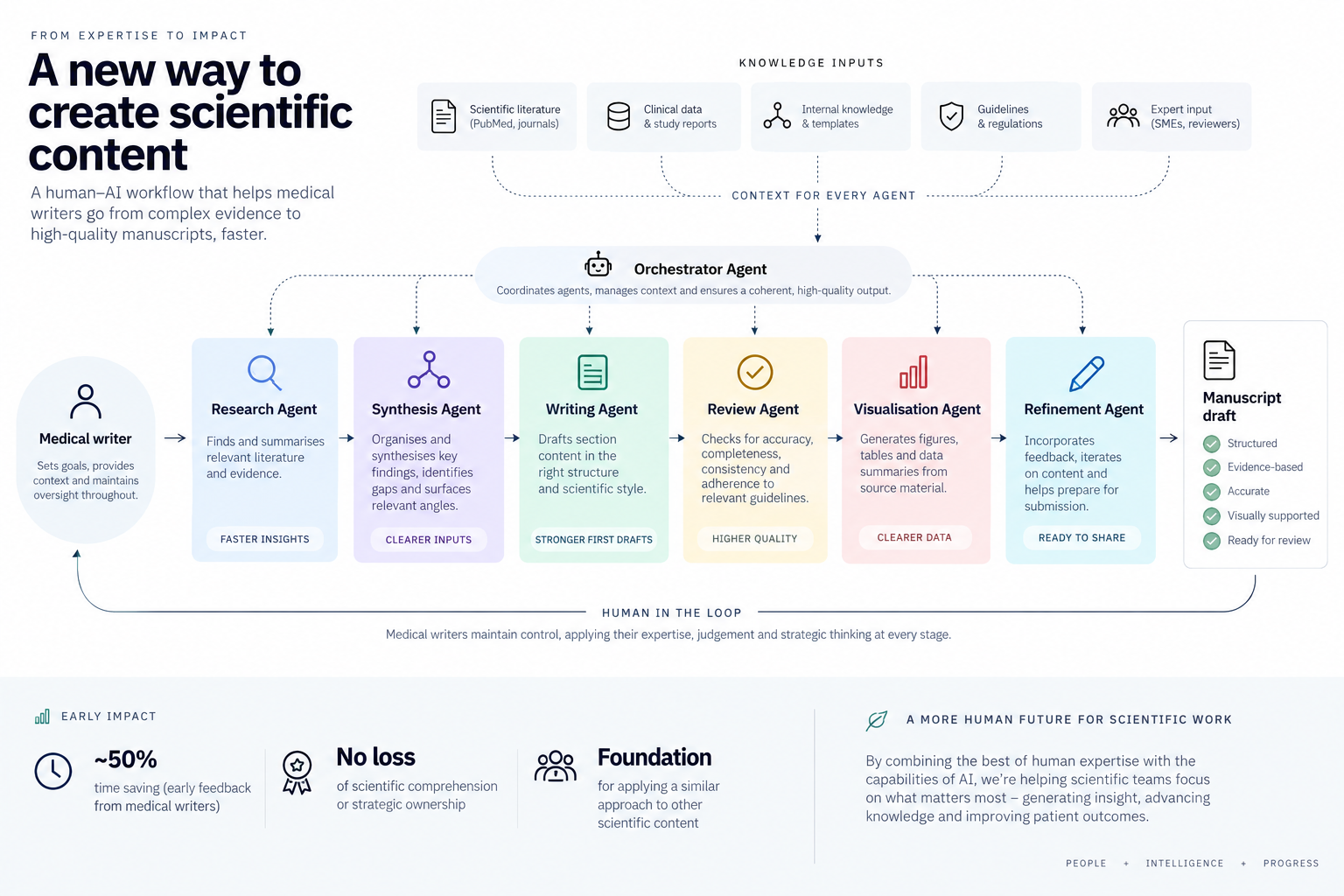
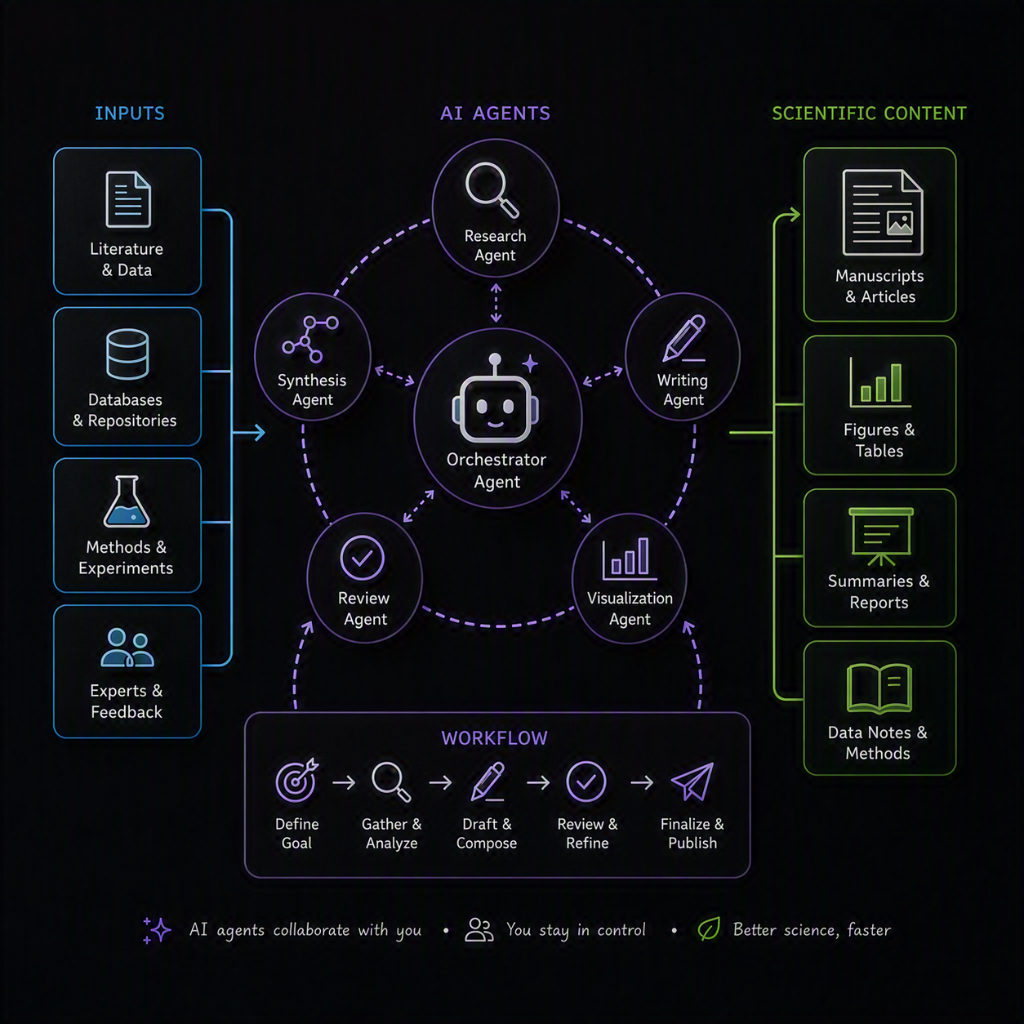
Idea: Redesign the manuscript development workflow around a series of dedicated AI agents, each supporting a specific part of the process and working together to create an end-to-end AI-enabled service for medical writers.
My role in this
I led the strategic and human-centred design of the initiative, working between our medical writers, Operations and technical teams to understand the existing workflow, identify where AI could create meaningful value, and translate those opportunities into discrete agent capabilities.
Importantly, we started with the work rather than the technology: understanding where time was being spent, where specialist judgement mattered, and where AI could augment our writers without removing their scientific or strategic ownership.
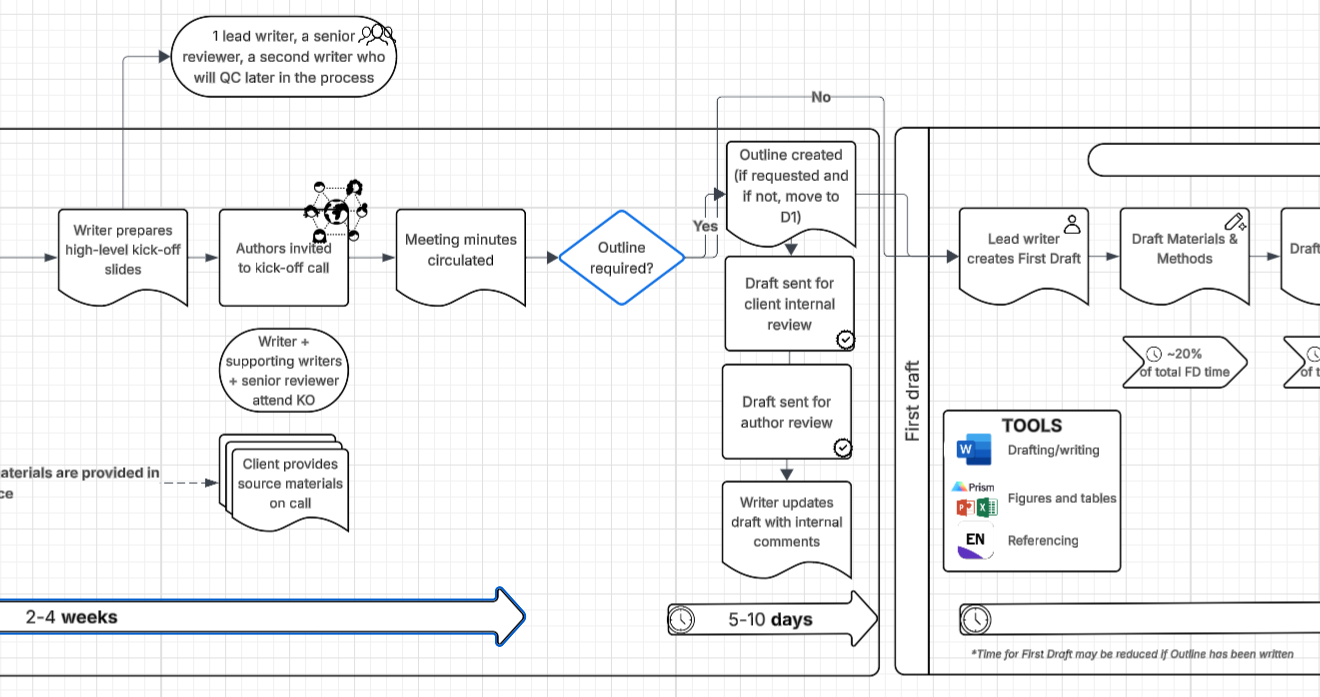
Working with our Head of Operations to map the end-to-end manuscript development process, including the key stages, teams involved and typical time spent across the workflow
Using that initial map to identify gaps, assumptions and areas requiring deeper understanding
Running workshops with medical writers to validate the workflow, fill those knowledge gaps and understand where friction and opportunity existed
Breaking a complex knowledge-work process into discrete opportunities that could be supported by dedicated AI agents
Working alongside technical and scientific specialists to translate those opportunities into feasible agent capabilities
Helping define how individual agents should interact with source material, existing processes and human expertise
Designing the experience around augmentation rather than automation, keeping medical writers responsible for scientific comprehension, judgement and strategic ownership
Establishing an incremental approach to development and testing rather than attempting to automate the entire workflow at once
Using feedback from medical writers testing the agents to refine both the capabilities and the wider AI-enabled workflow
Creating a foundation that could ultimately be applied to other scientific content types beyond manuscripts